

KLI Colloquia are invited research talks of about an hour followed by 30 min discussion. The talks are held in English, open to the public, and offered in hybrid format.
Join via Zoom:
https://us02web.zoom.us/j/5881861923?omn=85945744831
Meeting ID: 588 186 1923
Spring-Summer 2026 KLI Colloquium Series
12 March 2026 (Thurs) 3-4:30 PM CET
What Is Biological Modality, and What Has It Got to Do With Psychology?
Carrie Figdor (University of Iowa)
26 March 2026 (Thurs) 3-4:30 PM CET
The Science of an Evolutionary Transition in Humans
Tim Waring (University of Maine)
9 April 2026 (Thurs) 3-4:30 PM CET
Hierarchies and Power in Primatology and Their Populist Appropriation
Rebekka Hufendiek (Ulm University)
16 April 2026 (Thurs) 3-4:30 PM CET
A Metaphysics for Dialectical Biology
Denis Walsh (University of Toronto)
30 April 2026 (Thurs) 3-4:30 PM CET
What's in a Trait? Reconceptualizing Neurodevelopmental Timing by Seizing Insights From Philosophy
Isabella Sarto-Jackson (KLI)
7 May 2026 (Thurs) 3-4:30 PM CET
The Evolutionary Trajectory of Human Hippocampal-Cortical Interactions
Daniel Reznik (Max Planck Society)
21 May 2026 (Thurs) 3-4:30 PM CET
Why Directionality Emerged in Multicellular Differentiation
Somya Mani (KLI)
28 May 2026 (Thurs) 3-4:30 PM CET
The Interplay of Tissue Mechanics and Gene Regulatory Networks in the Evolution of Morphogenesis
James DiFrisco (Francis Crick Institute)
11 June 2026 (Thurs) 3-4:30 PM CET
Brave Genomes: Genome Plasticity in the Face of Environmental Challenge
Silvia Bulgheresi (University of Vienna)
25 June 2026 (Thurs) 3-4:30 PM CET
Anne LeMaitre (KLI)
KLI Colloquia 2014 – 2026
Event Details
Topic description / abstract:
In the last few decades, several very sophisticated accounts of causal explanation have been developed in the philosophy of science. According to these accounts causal explanations appeal to causal processes and relations that produce phenomena which we want to explain. However, recently ideas about non-causal explanations started to emerge, according to which non-causal explanations do not appeal to causal processes or microphysical details of physical systems, but rather to mathematical properties and structures or to metaphysical relations (realization, supervenience, constitution, emergence). The existence of causal and non-causal explanations implies an unbridgeable gap in our understanding of the world and how the science works, namely, given that every physical system is a part of the larger causal structure where every property or behavior is seen as an effect that has some causes and causal history, then how could the non-causal facts be explanatory of physical systems if they do not appeal to causes, causal histories or microphysical details?
Furthermore, given that non-causal explanations are sometimes used to devise neurological intervention (e.g. in implanting a neuromodulating device that stops the onset of symptoms in Parkinson’s disease the explanation appeals to facts about how mathematical properties of connectivity patterns in complex networks constrain the brain dynamics) or to design an ecological management policy (e.g. understanding the dependence between the health of a marine ecological community and the graph-theoretical hierarchies in the predation relations in such a community), it is important to have a clear set of the conditions of application of epistemic norms.
This project aims to answer these questions by providing a set of epistemic norms that are universally applicable to both seemingly incompatible families of explanations, as well as a set of conditions of application of these norms in clinical practice and policy making.
Biographical note:
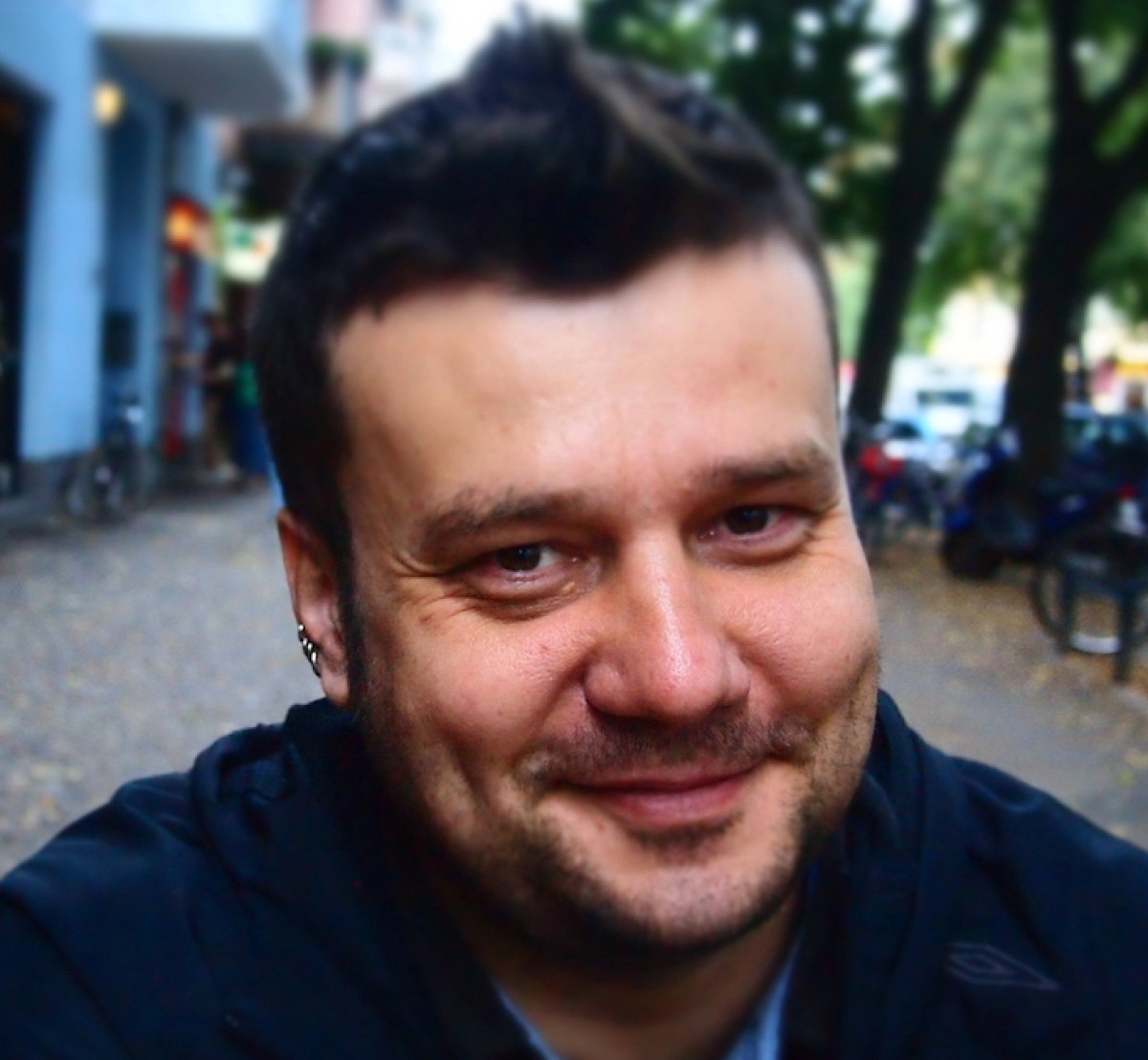
Daniel Kostić is a researcher at the interdisciplinary lab Sciences Philosophie Humanités (SPH-EA 4574) of the University Bordeaux Montaigne and University of Bordeaux. From 2016 until 2018, he was the Marie Skłodowska-Curie Fellow at the IHPST (CNRS-Sorbonne Pantheon Paris 1).
The overarching theme of his research is understanding the scientific explanation.
In the last couple of years, he has worked on a comprehensive account of topological explanations, especially in neuroscience. The term “topological” in this context is used in strictly graph theoretical sense, because these explanations describe how the facts about empirical properties of a system counterfactually depend on mathematical properties of connectivity patterns in complex networks. Work on topological explanations has led him to a larger, more normative issue of any successful explanation. He is currently developing a set of epistemic norms that can be universally applied to both causal and non-causal explanations.
Daniel is currently co-editing (with Claus Hilgetag and Marc Tittgemeyer) a theme issue in Philosophical Transactions of the Royal Society B: Biological Sciences, on the topic of “Unifying the essential concepts of biological networks”.
He received his PhD degree in philosophy from Humboldt University in Berlin.
