
News Details
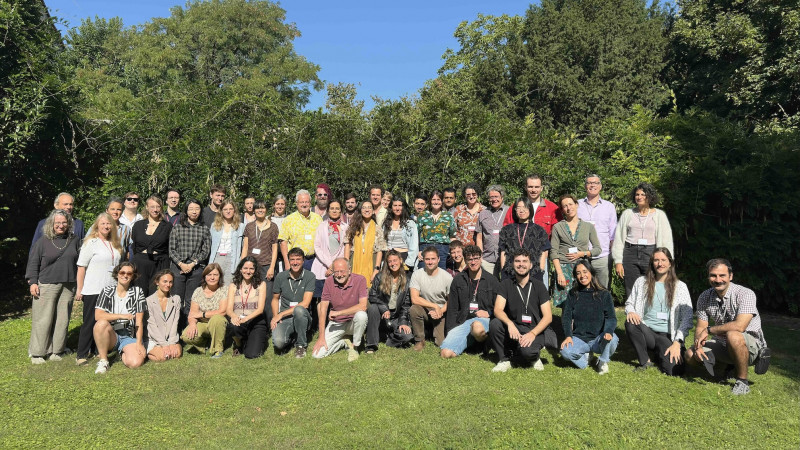
The European Advanced Seminar in the Philosophy of the Life Sciences (EASPLS) is a biennial summer school organized by a consortium of nine leading European centers in the philosophy of the life sciences. The 8th EASPLS summer school was held at the KLI on the topic of “Philosophy of Biology for a Healthy Planet”, with Sabina Leonelli and Thomas Reydon as directors. The work of participants focused on the question of how philosophy of the life sciences can contribute to understanding what planetary health entails and, more practically, to enhance the health and well-being of humans and nonhumans alike on a planet subject to climate change and biodiversity loss. Over an intensive week of collaborative workshops, thirty early-career researchers have developed interdisciplinary projects that explored what it means to lead a healthy life on a threatened planet, what the goal of a “healthy planet” would encompass, and how research in the natural sciences, the social sciences, and the humanities may contribute to achieving it. Senior and junior participants in the school worked together to investigate these questions, exchange experiences and insights, and question the multiple meanings that health can take depending on which biological systems, level of organization, or ecosystems one considers. The normative nature of such questions was highlighted on multiple occasions, particularly the significance of questioning the values and understandings of ‘good life’ underpinning specific visions of health, and the socio-political and industrial regimes under which humans are transforming basic life processes such as metabolism, reproduction and evolution. Two professional development activities were planned as part of the school to help participants reflect further, and practically, on such issues: through a panel discussion and a group exercise, students were asked to consider respectively the strategies and practices involved in academic publishing as well as the methods available to engage a variety of non-academic audiences (for instance through social media, school workshops or policy briefs). Within their collaborative workshops, participants were challenged to consider how their own research projects could be integrated into a broader argument around understanding planetary health, thereby getting to know each other’s projects and learning to build bridges between seemingly distant subjects of study. Participants were also asked whether their arguments and perspectives could be of use for solving real-world problems, and how. On the last day of the school, this group work culminated in six plenary presentations, all of which displayed the energy, ingeniousness and commitment of participants—with formats ranging from traditional academic talks to a “planetary health helpline” talk show. Each participant got a chance to talk during these presentations and the ensuing discussions, thus experimenting with innovative ways to present their research. For their work on these issues, the participants received input from two keynote lectures (Julie Jebeile and Alkistis-Elliott-Graves) as well as nine lectures by senior faculty of the EASPLS consortium, including John Dupré, Cristina Villegas, Marcel Weber, Thomas Pradeu, Arantza Etxeberria, Philippe Huneman, Joeri Witteveen, Adrian Currie, and Sabina Leonelli.
(This report was kindly contributed by Thomas Reydon.)