
News Details
Date: November 19, 2026, 15:00 – 16:30 CET
Join via Zoom:
https://us02web.zoom.us/j/5881861923?omn=85945744831
Meeting ID: 588 186 1923
Topic description / abstract
At the end of the first week after fertilization, the human blastocyst invades deeply into the endometrium to establish a haemochorial placenta. This invasive mode of placentation, specific to great apes, supports the high metabolic demands of foetuses with expanded brains but also is also associated with high rates of implantation failure and severe gestational complications, particularly through aberrant invasion of the nascent placenta. Because early human gestation remains largely inaccessible to functional investigation, the genetic programs governing this critical interface have remained elusive. Using complete stem-cell-derived blastocyst models (blastoids) to recreate early embryonic–endometrial interactions, we investigate the evolutionary divergence and conserved developmental principles of human development. This work aims to elucidate how evolutionary adaptations coordinate embryonic development and uterine embedding, revealing the molecular origins of both reproductive advantages and intrinsic vulnerabilities in early human pregnancy.
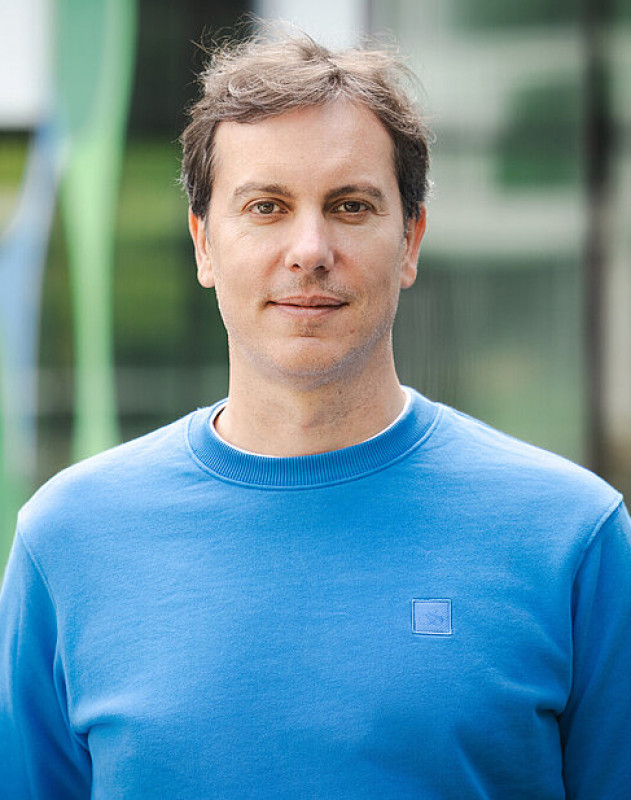
Biographical note
Nicolas Rivron is a group leader at the Institute for Molecular Biotechnology of the Austrian Academy of Sciences (IMBA) in Vienna. He led the development of the first complete blastocyst models, known as blastoids, in mice and humans. His lab uses these models to study embryonic self-organization and the evolutionary origins of human reproductive traits. He co-founded dawn-bio to translate blastoid-based discoveries into medical advances and works closely with ethicists, philosophers, and legal scholars to develop international guidelines for embryo models.